Can You Use Aluminum Foil in a Toaster Oven? [2025 Guide]
If you’ve ever wondered whether it’s safe to use aluminum foil in your toaster oven, you’re not alone. This is one of the most common questions toaster oven owners ask, and for good reason the answer isn’t as straightforward as you might think.
![Can You Use Aluminum Foil in a Toaster Oven? [2025 Guide]](https://ovenessentials.site/wp-content/uploads/2025/09/Generated-Image-September-30-2025-1_44PM.png)
The short answer? Yes, you can use aluminum foil in a toaster oven, but only if you do it correctly. Using it improperly can create serious safety hazards, including fire risks and damage to your appliance.
In this guide, I’ll walk you through everything you need to know about using aluminum foil safely in your toaster oven, including the dos and don’ts, safer alternatives, and answers to your most common questions.
Why People Use Aluminum Foil in Toaster Ovens
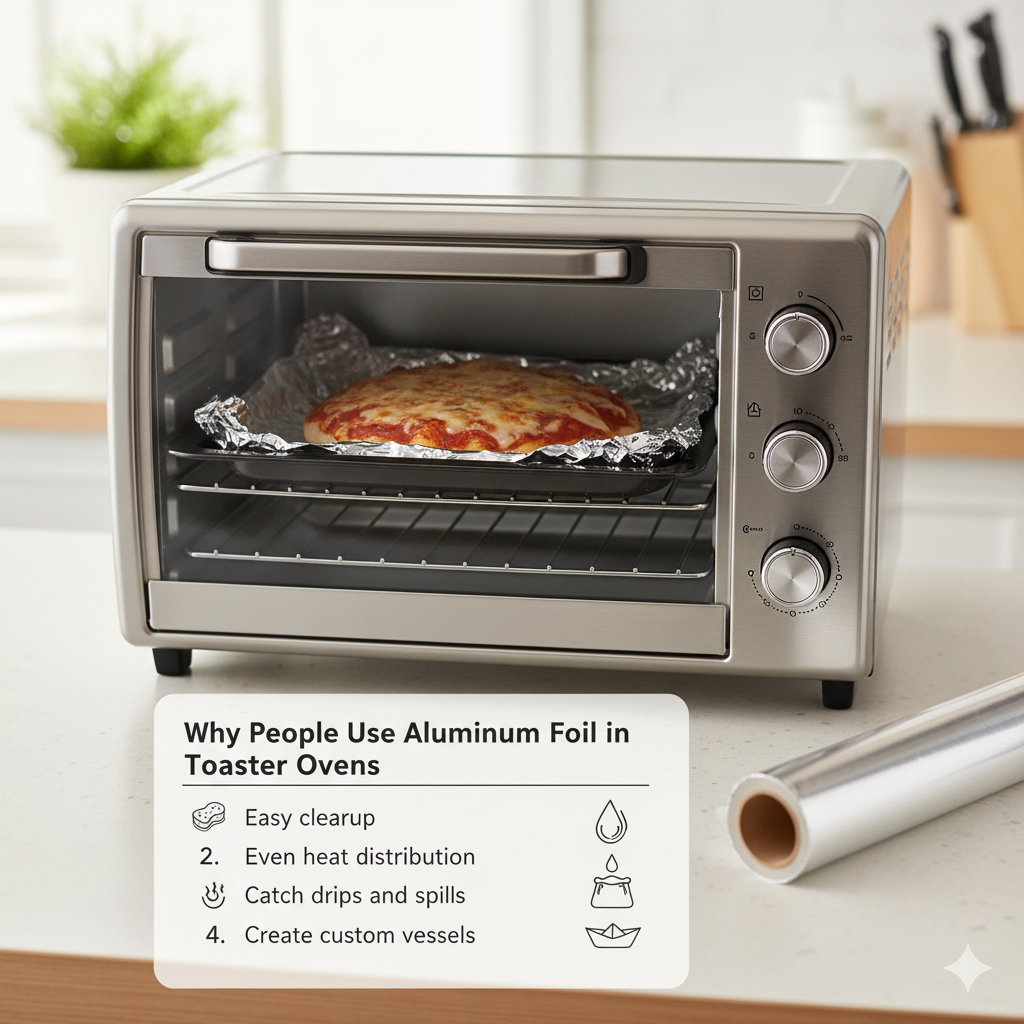
Before we dive into the safety guidelines, let’s talk about why aluminum foil is so popular for toaster oven cooking:
Easy cleanup: Lining your tray with foil means less scrubbing after cooking messy foods like cheese or sauces.
Even heat distribution: Foil can help reflect heat, potentially creating more even cooking for certain dishes.
Catch drips and spills: Placing foil under foods prevents grease and liquids from burning onto your toaster oven tray.
Create custom cooking vessels: You can shape foil into small pans or pouches for individual portions.
While these benefits are real, they come with important safety considerations that you absolutely need to understand.
The Dangers of Improper Aluminum Foil Use
Using aluminum foil incorrectly in your toaster oven can lead to serious problems:
Fire Hazards
Toaster ovens use heating elements that get extremely hot—often reaching temperatures of 450°F or higher. If aluminum foil comes into contact with these elements, it can spark, melt, or even catch fire. This is the most critical safety concern.
Uneven Heating
Blocking airflow with foil can prevent proper heat circulation, leading to unevenly cooked food. Your toaster oven is designed with specific air pathways, and covering these can interfere with its performance.
Appliance Damage
Foil touching the heating elements can cause them to overheat and fail prematurely. Additionally, melted foil can damage the interior surfaces of your toaster oven, potentially voiding your warranty.
Reflective Heat Damage
The reflective properties of aluminum foil can intensify heat in concentrated areas, potentially damaging your toaster oven’s interior coating or causing hot spots that affect cooking performance.
The Safe Way to Use Aluminum Foil in Your Toaster Oven
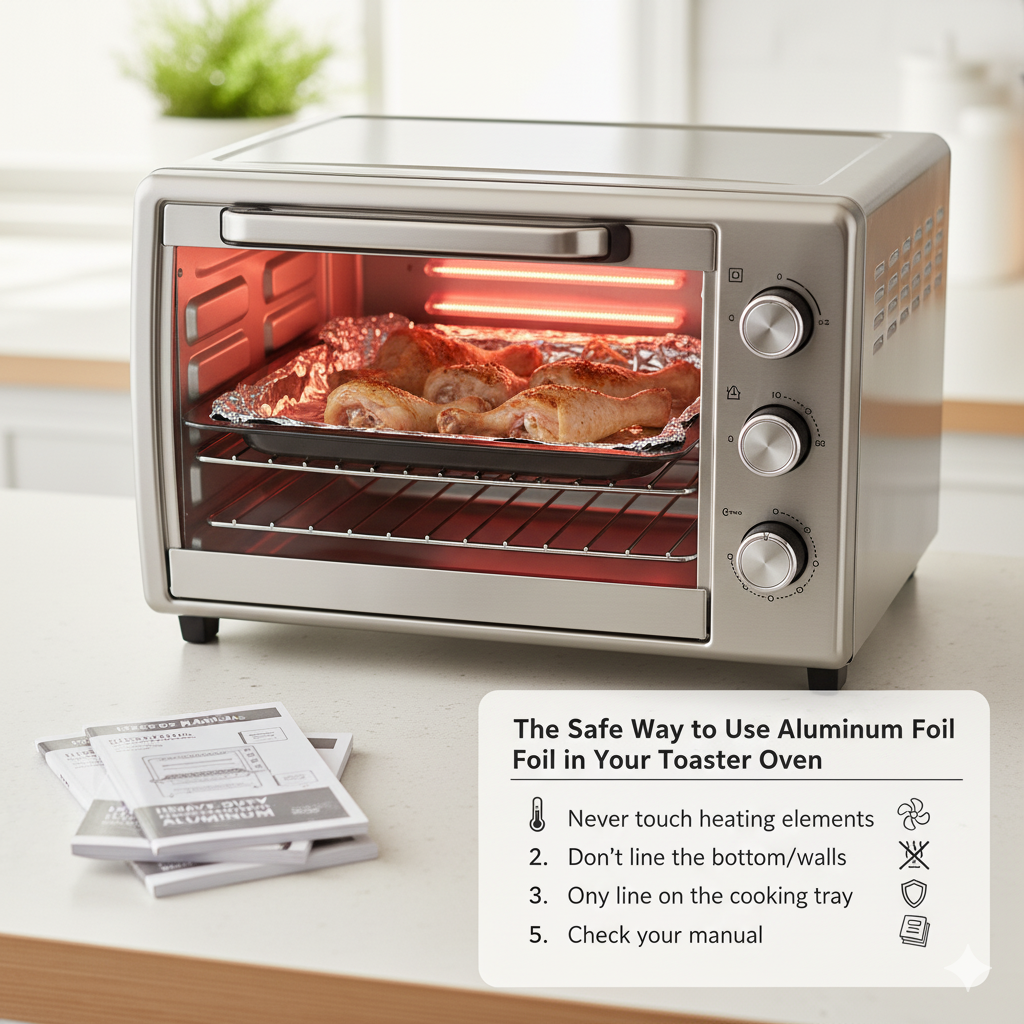
If you decide to use aluminum foil in your toaster oven, follow these critical safety guidelines:
Rule #1: Never Let Foil Touch the Heating Elements
This is the golden rule. Always ensure there’s at least 1-2 inches of clearance between your foil and any heating element (top, bottom, or sides). Check your toaster oven’s manual for specific clearance recommendations.
Rule #2: Never Line the Bottom Tray or Walls
Do not line the crumb tray, bottom of the oven, or any walls with aluminum foil. This blocks essential airflow and heat circulation. The crumb tray is specifically designed to catch debris without interfering with your oven’s performance.
Rule #3: Only Use Foil on the Cooking Tray
The safest way to use aluminum foil is to line your removable cooking tray or baking pan. Make sure the foil is:
- Trimmed to fit the pan without hanging over the edges
- Pressed down smoothly without wrinkles or folds that could catch air and blow around
- Secured by the weight of your food if possible
Rule #4: Use Heavy-Duty Foil
Regular aluminum foil is thin and can tear easily, potentially creating pieces that could blow around and touch heating elements. Heavy-duty foil is more stable and less likely to move during cooking.
Rule #5: Create Proper Ventilation
If you’re covering food with foil, don’t seal it completely. Leave small gaps or poke holes to allow steam to escape and air to circulate. This prevents moisture buildup and ensures even cooking.
Rule #6: Check Your Manual First
Always consult your toaster oven’s user manual before using aluminum foil. Some manufacturers explicitly prohibit its use, while others provide specific guidelines. Following these instructions protects you and keeps your warranty valid.
Can You Use Aluminum Foil in a Breville Toaster Oven?
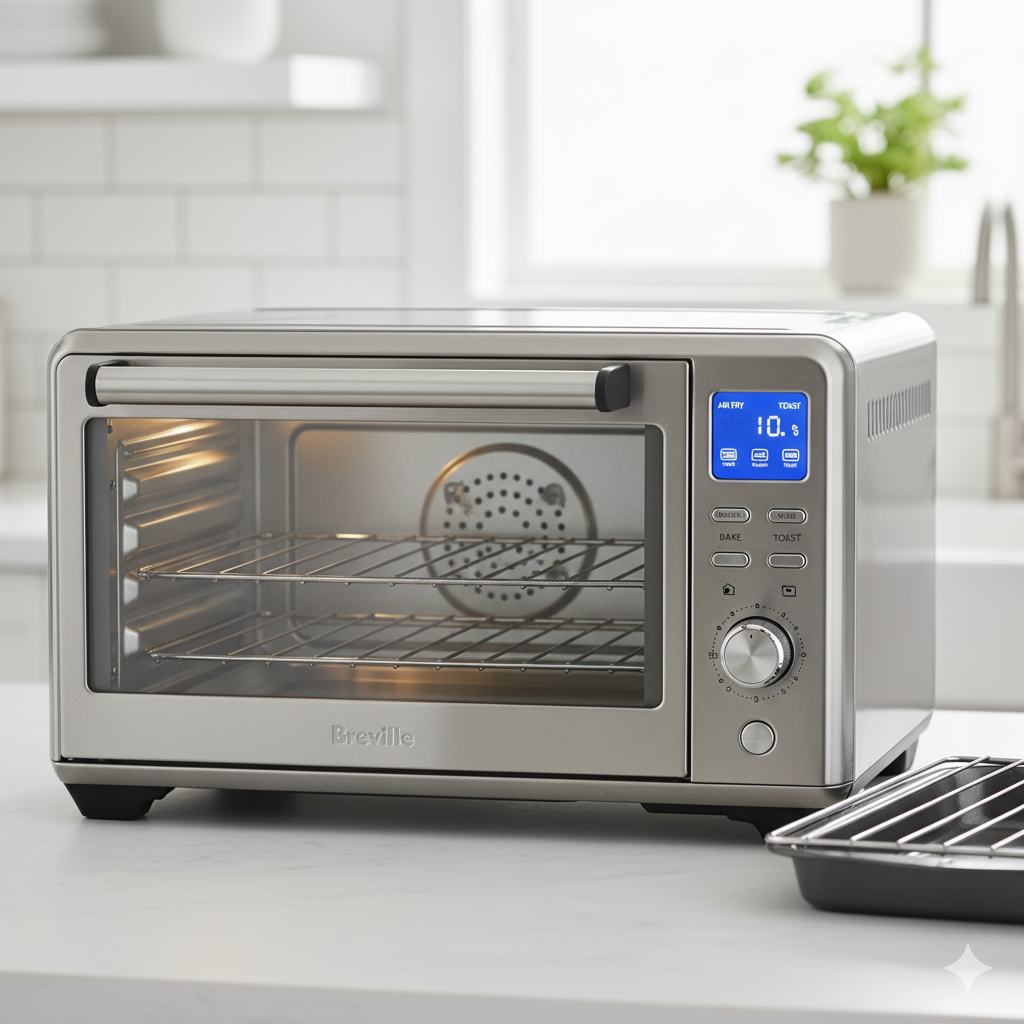
Breville toaster ovens are among the most popular models, and many users wonder about foil safety. Breville generally allows aluminum foil use on the cooking tray only, with the same safety precautions mentioned above. However, specific models may have different guidelines.
For Breville Smart Ovens, the manufacturer recommends:
- Never covering the crumb tray with foil
- Keeping foil away from all heating elements
- Using foil only to line the included baking pan
- Checking your specific model’s manual for any additional restrictions
Can You Use Aluminum Foil in a Convection Toaster Oven?
Convection toaster ovens use fans to circulate hot air, making proper airflow even more critical. You can use aluminum foil in a convection toaster oven, but with extra caution.
Special considerations for convection models:
- The fan can blow lightweight foil around, increasing the risk of it touching heating elements
- Blocking airflow defeats the purpose of convection cooking
- Use heavier-duty foil and ensure it’s well-secured
- Avoid covering vents or air circulation pathways
- Consider reducing or eliminating foil use when convection mode is active
Can You Use Aluminum Foil Pans in a Toaster Oven?
Yes, aluminum foil pans are generally safe for toaster oven use, and they’re actually safer than loose foil in many cases. These disposable pans are designed to maintain their shape and won’t blow around or fold unexpectedly.
Tips for using aluminum foil pans:
- Choose pans that fit comfortably with at least 1 inch of clearance on all sides
- Avoid pans that are too tall and might touch the top heating element
- Place them on the wire rack for best results
- Be aware that thin disposable pans may warp at high temperatures
- Never use damaged or crumpled foil pans
Safer Alternatives to Aluminum Foil in Toaster Ovens
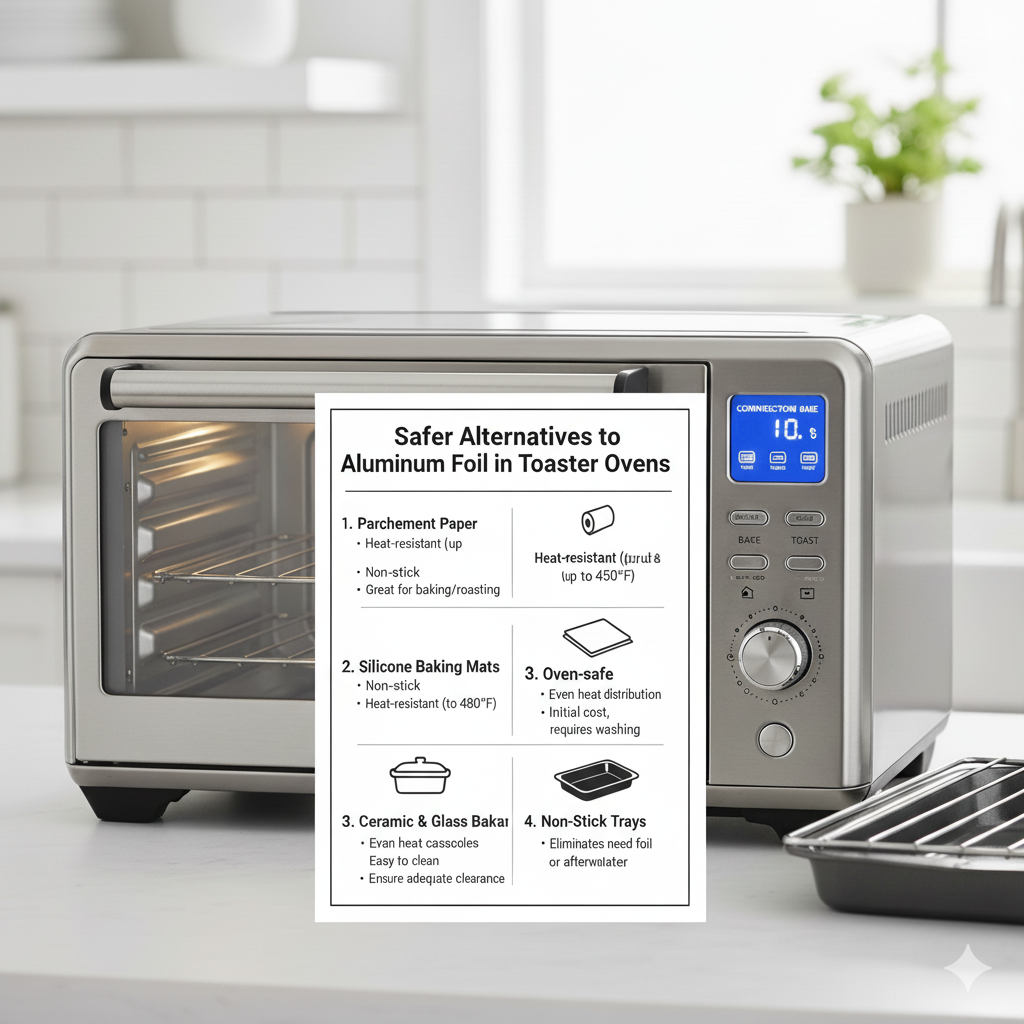
If you’re looking for ways to keep your toaster oven clean without the risks associated with aluminum foil, consider these alternatives:
Parchment Paper
Parchment paper is heat-resistant up to 420-450°F and won’t conduct heat like aluminum foil. It’s perfect for baking and roasting, though you should still keep it away from heating elements.
When to use it: Baking cookies, roasting vegetables, cooking fish When to avoid it: Broiling or cooking above 420°F
Silicone Baking Mats
Reusable silicone mats are heat-resistant, non-stick, and eco-friendly. They fit perfectly on toaster oven trays and make cleanup a breeze.
Pros: Reusable, non-stick, heat-resistant to 480°F, eco-friendly Cons: Initial investment, requires washing
Ceramic or Glass Bakeware
Oven-safe ceramic and glass dishes are excellent for toaster ovens. They distribute heat evenly and are completely safe.
Best for: Casseroles, baked dishes, reheating Note: Ensure your dish fits with adequate clearance
Non-Stick Toaster Oven Trays
Many toaster ovens come with non-stick trays, or you can purchase aftermarket options. These eliminate the need for foil entirely.
Simply Clean Your Trays
Sometimes the best solution is to embrace cleaning. Line your tray with parchment when appropriate, and clean it regularly with baking soda paste or dish soap.
Common Mistakes to Avoid
Even experienced cooks make these aluminum foil mistakes in toaster ovens:
Crumpling foil too much: Wrinkled foil creates air pockets that can catch airflow and cause the foil to move or fold up toward heating elements.
Using foil for broiling: The high, direct heat of broiling makes foil use especially risky. The intense heat increases the chance of fire and can cause food to cook unevenly.
Covering air vents: Many toaster ovens have vents on the sides or back. Blocking these with foil prevents proper air circulation and can cause overheating.
Reusing torn foil: Damaged foil is more likely to tear further during cooking, potentially creating loose pieces that could touch heating elements.
Making foil “tents” that are too tall: When covering food with a foil tent, make sure it’s not tall enough to touch the top heating element when it expands from heat.
Ignoring manufacturer warnings: If your manual says “no foil,” there’s usually a good reason. Don’t risk it.
Frequently Asked Questions
Is it safe to use aluminum foil in a toaster oven?
Yes, aluminum foil is safe to use in a toaster oven when used properly. The key is keeping it away from heating elements, using it only on cooking trays, and ensuring proper airflow. Always check your toaster oven’s manual first.
Can aluminum foil cause a fire in a toaster oven?
Yes, aluminum foil can cause a fire if it touches heating elements. The intense heat can cause the foil to spark or ignite. This is why maintaining proper clearance is absolutely essential.
Should I line my toaster oven with foil for easy cleanup?
No, you should never line the bottom, walls, or crumb tray of your toaster oven with foil. This blocks airflow and can cause dangerous overheating. Only line the removable cooking tray if needed.
Can I use aluminum foil to cover food in a toaster oven?
Yes, you can cover food with aluminum foil, but make sure the foil doesn’t touch the heating elements and isn’t sealed too tightly. Leave gaps for steam to escape and ensure the foil won’t expand upward as it heats.
What’s the best way to keep my toaster oven clean without foil?
Use parchment paper (below 420°F), silicone baking mats, or simply clean your trays regularly. These alternatives are safer and often work just as well as foil for preventing mess.
Can I put aluminum foil in a Ninja Foodi toaster oven?
Ninja Foodi toaster ovens allow aluminum foil use on the cooking tray only, following the same safety guidelines. Never place foil on the bottom tray or cover air vents. Check your specific model’s manual for details.
The Bottom Line on Aluminum Foil and Toaster Ovens
Using aluminum foil in your toaster oven isn’t forbidden, but it requires careful attention to safety. The key points to remember are:
- Foil must never touch heating elements
- Only use foil on the cooking tray, never on the bottom or walls
- Maintain proper airflow and ventilation
- When in doubt, use safer alternatives like parchment paper or silicone mats
- Always consult your toaster oven’s manual first
Your toaster oven is a versatile kitchen tool that can handle most cooking tasks beautifully without aluminum foil. But when you do need foil for a specific purpose, following these guidelines will keep you safe and your appliance working properly for years to come.
Remember: a few extra minutes of cleanup is always worth avoiding the risk of fire or appliance damage. Cook smart, stay safe, and enjoy your toaster oven!
👉 Ready for more? Check out our [Toaster Oven Guides] section for more easy, useful guides.